Our Simple Classical Homeschool Routine in a Busy Season
Life looks a little different right now as we pack and prepare to move into our new home.
Homeschooling took a back seat for a time while I navigated a stressful purchase process.
We homeschool year-round so we can take time off when we need to, whether that’s for sickness or particularly busy seasons like this.
But after already taking two weeks off, and with another six weeks ahead of packing, preparing our home for open homes, and keeping everything ready for viewings, I realised we needed to simplify things.
So we shifted to a very simple, bare-bones homeschool routine.
For context, my eldest is about to turn six. Many would say formal schooling isn’t necessary yet, but here in New Zealand children typically start school at five, and often begin learning earlier through preschool or kindergarten.
We’re also in a full season of life with a seven month old, a nearly two year old, and a three year old.
Without the younger ones, this routine could easily be done in under an hour. But in reality, our days are full of interruptions, and learning often happens in short bursts spread across the day.
This simple homeschool routine is very memory work heavy, as we follow a classical education style. We make the most of children’s sponge-like minds by memorising as much as we can while they are young.
This has truly been the backbone of our simple homeschool routine in this busy season.
What Our Simple Homeschool Routine Looks Like Right Now
Memory Work
In a classical education model, memory work is a key part of the early “grammar stage,” when children are naturally able to absorb and retain information. If you’re homeschooling in a busy season, this is one of the easiest ways to stay consistent, it requires very few materials and can be done anywhere.
This stage focuses on building a strong foundation of knowledge through memorisation. Learning poems, facts, and basic concepts by heart gives children something to draw on later, supporting deeper understanding as they grow.
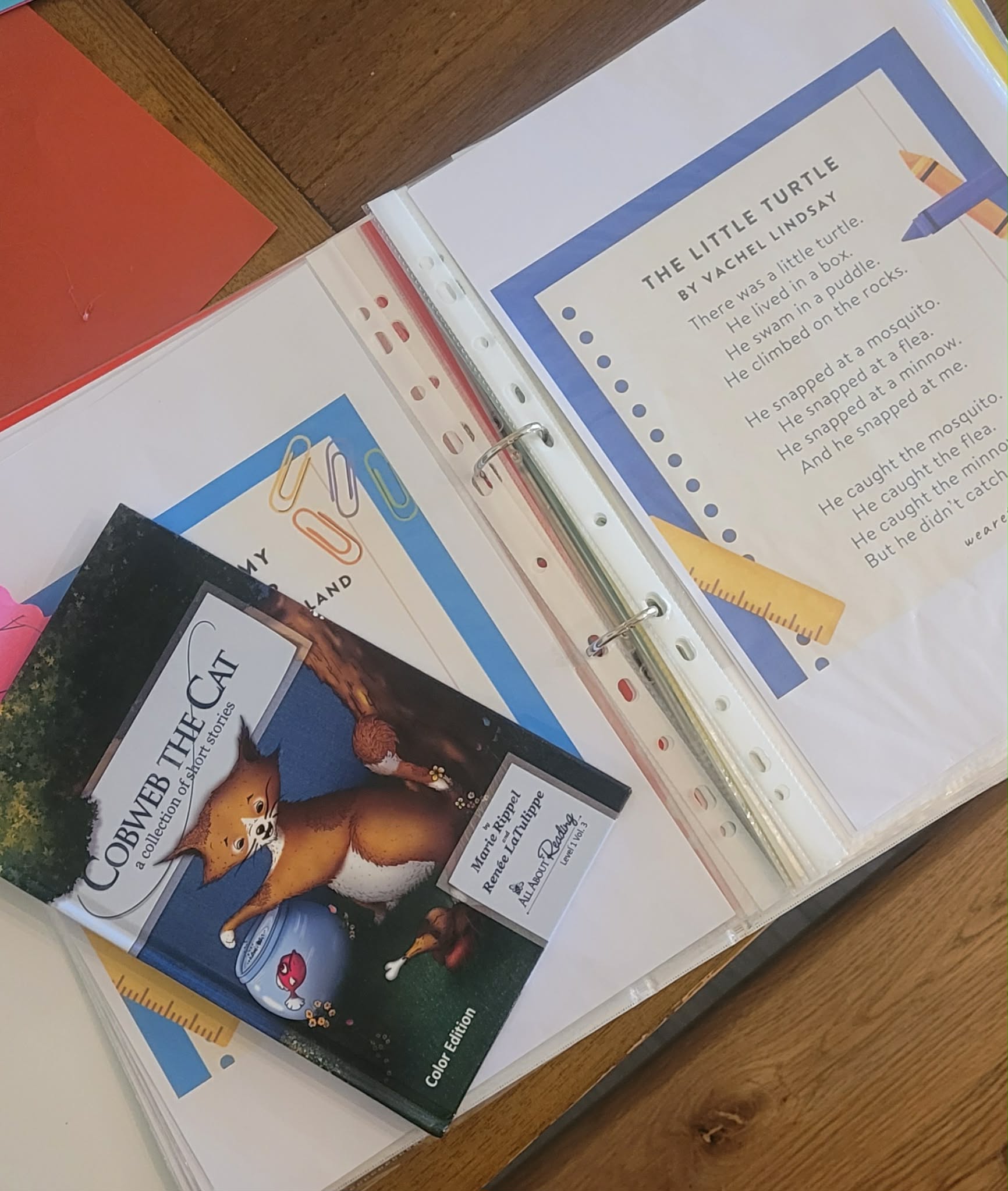
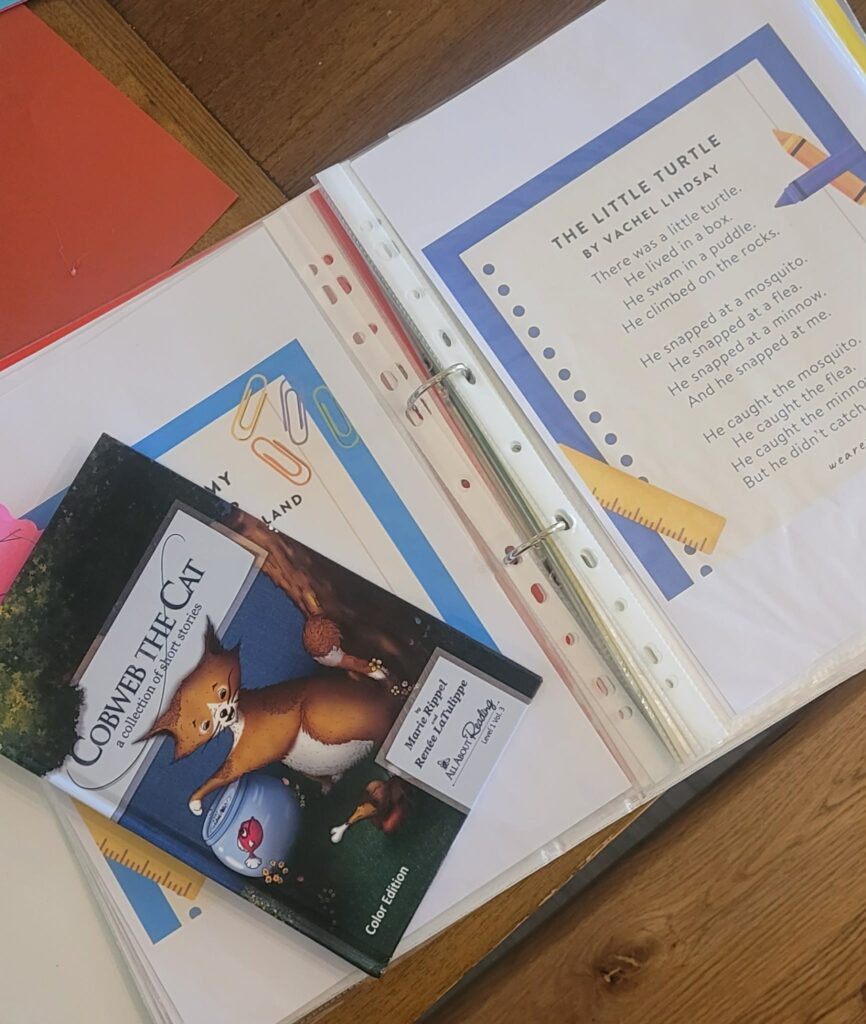
We begin our day by reading a poem we are working to memorise and reviewing a few older ones. We also use the scripture memorisation system from Simply Charlotte Mason.
Mathematics
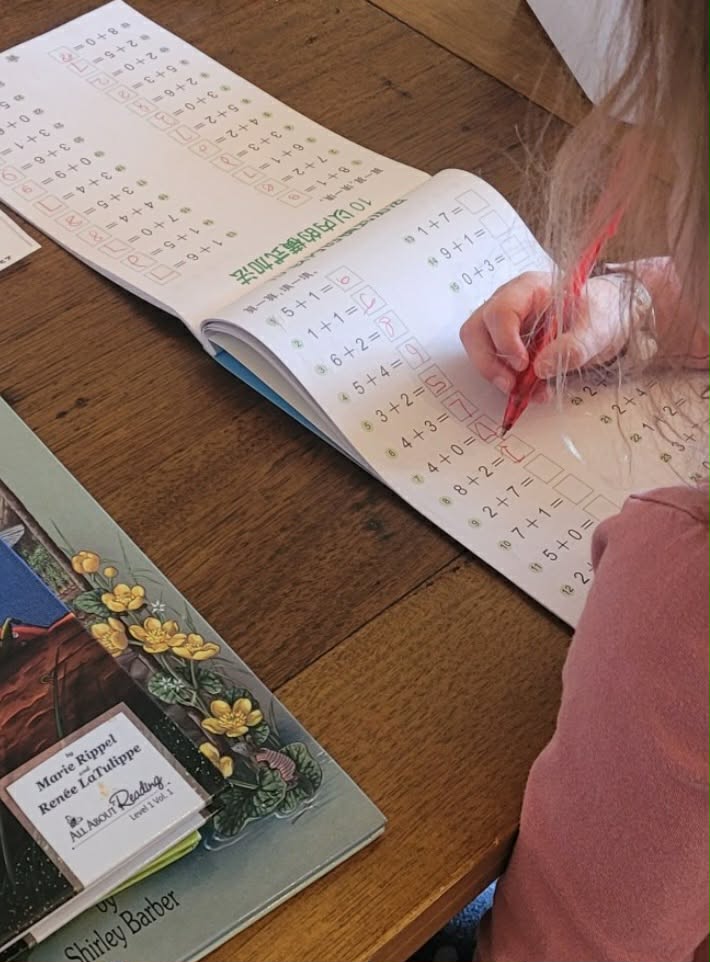
On our busiest days, I simply give my child around 30 maths problems to solve.
These vary in difficulty depending on ability, but the focus is purely on revision and strengthening what has already been learned, not introducing new concepts.
Right now, this looks like a lot of “9 + 4” and “20 – 5”.
I bought a few simple workbooks from Temu, but often I just write problems in an exercise book or use a whiteboard.
We are also now doing a lesson from Math With Confidence Level Two four days a week. The student workbook makes it easy for my five year old to work independently while I’m feeding the baby or changing a nappy.
This flexible approach to maths has worked really well for our homeschool routine during this busy season.
Reading
Full sit-down lessons were a struggle during more chaotic days, so we simplified this too.
We focused on reading a story from an early reader with no new blends or phonograms.
When learning to read, this is often the most effective approach anyway. I’ve found the hardest part is building the “reading muscle” and increasing reading stamina.
So in many ways, this season has actually been beneficial.
We always aim to do reading in the morning while her mind is fresh, once it hits lunchtime, the chances of it happening are very slim.
Writing
We use the four year guide version of Writing With Ease by Susan Wise Bauer.
The difference between this and the workbook version is that the hard cover book is designed to work alongside the books you are already reading in your homeschool, rather than providing all content for you.
I prefer this approach because it strengthens comprehension and helps bridge the connection between reading and writing.
In busy seasons, we keep it very simple:
- Day one: one or two lines of copywork
- Day two: a short narration exercise
It’s gentle, effective, and doesn’t require much setup or extra books – which is ideal for a simple homeschool routine.
Grammar
We have also been using First Language Lessons.
These lessons are incredibly quick, often taking just five minutes, but still feel meaningful and structured.
It’s a small addition that helps us feel like we’re covering something important, even on busy days.

Science, Art & Music
In our current busy season of moving house, these are the first subjects we set aside.
At almost six, we aren’t doing formal science, art, or music right now, but it does happen naturally.
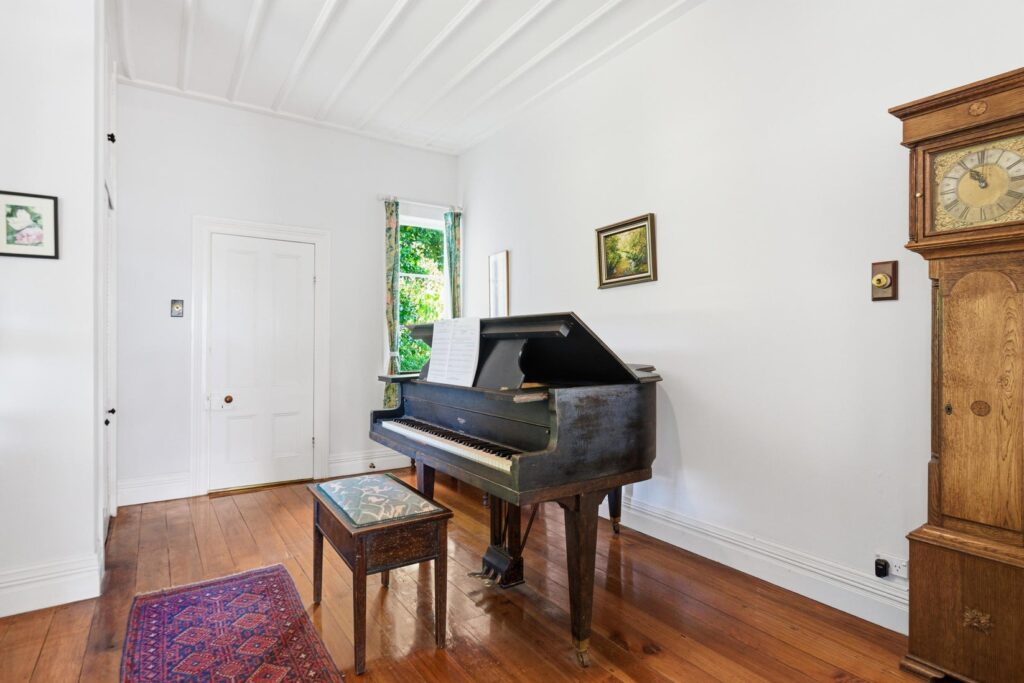
My stepdaughter plays piano and will occasionally give the younger ones quick lessons. Sometimes I’ll simply set a timer for practice while I tend to other children or tasks.
We also attend a weekly playgroup where there is usually a craft activity.
When you homeschool year round, it’s much easier to let these subjects go for a time, knowing you can return to them later.
Final Thoughts
This routine isn’t perfect, and it certainly doesn’t look the same every day.
But in a full and busy season of life, it’s enough.
This simple homeschool routine has allowed us to stay consistent without adding pressure, and to keep learning going even in the middle of packing, planning, and constant interruptions.
We’re focusing on what matters most, letting go of what we can, and trusting that meaningful learning is still happening.
And for now, that feels exactly right.
-Emma