15 Things We Memorise In Our Classical Homeschool
There’s something so special about the early years of a classical homeschool.
In the grammar stage, children are naturally wired to absorb the world around them with very little effort. Their minds are like sponges, taking in words, rhythms, facts and patterns simply through repetition and exposure.
Rather than pushing lateral thinking too early, this stage leans into that God-given ability to memorise. It’s gentle, consistent and deeply effective.
What might seem simple on the surface is actually laying an important foundation. These small pieces of memorised knowledge become the framework they’ll draw from later on. As they grow with classical homeschool, they move into the logic stage, and eventually the rhetoric stage, they won’t be starting from nothing as they’ll already have a rich store of language, ideas, and facts to pull from.
These are some of the things we’ve chosen to focus on memorising as part of our classical homeschool routine:
1. Name and Address
Always start here. I start teaching children their full name, middle name included around two years old. When it comes to memorising their address, I teach the full postal address with suburb, city, state and country included. Postcodes are good extra.
2. Birthdate
Day, month and year. Including the year helps when you are learning the date and doing calendar work in your homeschool. My three year old has just grasped the concept of years, for a while she thought her birth year should increase as she aged! It was a good lesson that I could relate to a real life example.
3. Parents Phone Number
This is necessary for safety. A three or four year old is capable of memorising a standard mobile phone number. I teach the sentence in full “My Mum’s phone number is xxx” so when they repeat it to someone in an emergency it makes sense.
4. Emergency Phone Number
I teach the sentence in full “In an emergency, I call 111”.
It is also important to remember, in a day where landlines are almost extinct, this will also require the child to know your unlock passcode on your cellphone, and how to access the keypad to dial. I like to run through the scenario, just in case it’s ever necessary.
5. Days Of The Week, Months Of The Year and Seasons
I start teaching the names of these early on.
Make sure you teach the seasons in order “Spring, Summer, Autumn/Fall, Winter”. Once you have the names down, move into learning how many days in a week (7) and how many months of the year (12). You could then move to years in a decade and millenium.
Remember to expect your answers in full sentences.
Parent: “How many days in a week?”
Student: “There are seven days in a week.”
6. Poetry
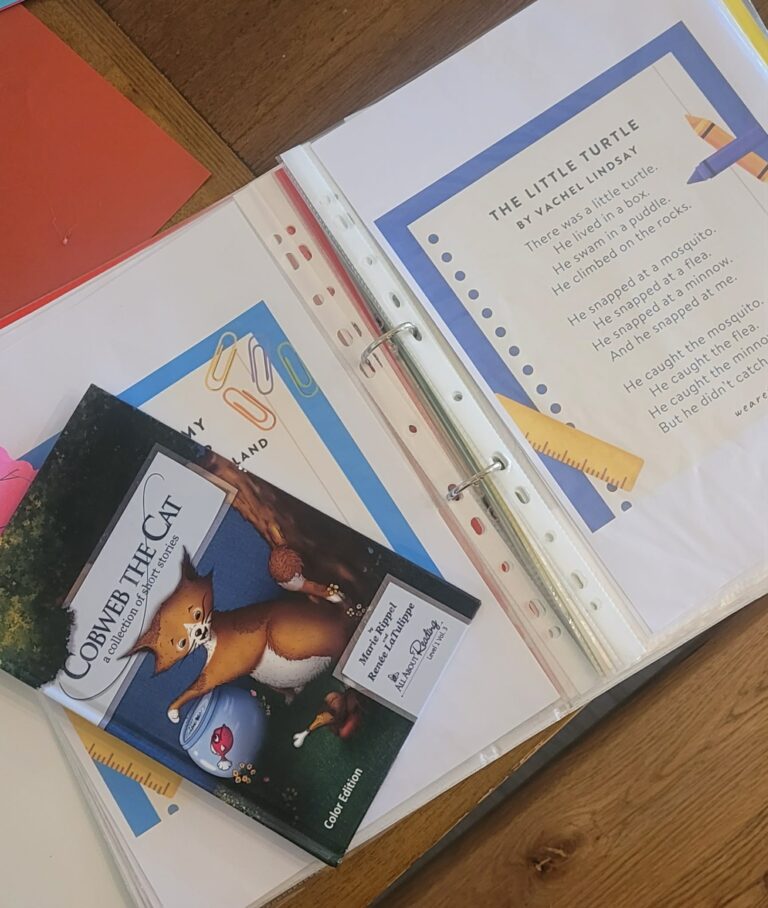
We are always learning a new poem, and we review constantly.
When driving in the car it’s a good time to cycle through a few old ones. It’s also important for your younger kids to hear the review often, as they won’t have had the same exposure as the older ones to the initial learning period.
For grammar instruction we use ‘First Language Lessons’ By Jessie Wise which has some great introductory poems, that also teach things like months of the year.
7. Countries and Continents
We have nearly memorised all the countries in Oceania, which is a great one to start with being from New Zealand, and it only has 14 countries.
Alternatively start with a list of continents, or the states in your home country. Memorising geographical landmarks in a classical homeschool setting are a great foundation for learning world history later on.
8. Planets In Order
Perfect yet simple foundation for asking questions about the universe. A great start to fostering interest about science, and can lead to exploring rabbit holes.
To expand on this for older children, you can learn the moons of each planet.
9. Scripture
We follow Simply Charlotte Mason’s Scripture Memory System. I printed out their free cards and purcashed a cheaper container from Temu to store them.
I have actually used this system for poems too. I associate a poem with each verse card and then I don’t miss revising a learned poem. Just write the poem name on the bottom or back of the scripture card. Then it becomes part of the same system.
10. Prayers
We memorised the Hail Mary, Our Father and Glory Be Catholic prayers. Universally known and recognised, these are a great foundation to lay for young children in classical homeschools.
I remember learning these from my Nana as a young child and remembered most of them as an adult, despite having not said them for years myself.
11. Books Of The Bible In Order
We love the song ‘27 Books’ for memorising the New Testament books in order. We have recently started learning the Old Testament books in order too, these difficult names prove a great challenge for children. Our three year old loves to say ‘Genesis, Exodus, Leviticus’!
12. Character Trait Definitions
I use Character Libraries for their amazing worksheets on each character trait. I have used a combination of their definitions and Google definition to create my own document with the definitions of over 40 traits.
Be sure to talk in full sentences to encourage this for future narrations in a classical homeschool.
Parent: “What is Honesty?”
Student: “Honesty is being truthful in what I say and do”
13. Skip Counting
I wish I knew the value of teaching this early on.
A child who can count in 2’s, 5’s and 10’s will have a much easier time in early mathematics.
If you are from the US, you should progress to counting in 25’s, as this helps when learning to count money. In New Zealand we don’t have a 25c coin, so I don’t see the same value of learning this before 6, I prefer to move to counting in 3’s.
14. Digits of Pi, Phi or e
Great for impressing the grandparents.
My 5 year old (and now me by association!) knows Pi to 46 decimal places.
Every day we go over them and about once a week we add another group of digits. Find a rhyme or pattern within these large numbers to memorise it in chunks. For example when we knew 3.14159, we would add “265…35!” with emphasis on the 5s as we spoke. It became like a song or poem with a specific rhythm to help with the random digits.
It doesn’t matter that your child doesn’t know what Pi means, she doesn’t need to know about the relationship of a circle’s circumference to its diameter yet. For now it’s a great mind-expanding memorisation activity, and when it comes up in higher level mathematics, she will feel a lot less intimidated having heard it before!
Exactly as prescribed for the grammar years in a classical homeschool.
15. Quotes and Speeches
Start with great quotes from scientists, activists, or inspirational people from history. You can progress to full speeches later.
I love simple quotes like “Better to remain silent, and be thought a fool – than to speak and remove all doubt”! Though I have tried my best to explain the meaning, it may be lost on the young children to start with. But as they grow, this will remain and hopefully, be utilised!
These years are about laying a quiet and steady foundation, especially as we prepare to move house in a busy season. The things we choose to memorise now may seem pointless at first, but they are gently shaping how our children will think, speak, and understand the world in the years to come.

There’s a lot of trust involved in this stage. Classical homeschooling is about trusting that what is stored away now will be drawn out later, when they are ready to reason, question, and express their own ideas with confidence. This is what the grammar stage is for.
Remember, it’s not important that your child doesn’t grasp the full understanding of what they memorise just yet.
In many ways, the grammar stage is less about immediate output and more about preparation. It’s about filling their minds while they’re most ready to receive, trusting that in time, it will all come together.
-Emma